



Négy nap, több mint 2600 résztvevő és 294 szekció – augusztus végén Athénban találkozott a régészet nemzetközi közössége. Az European Association of Archaeologists (EAA) 32. éves konferenciáján intézetünk munkatársai is aktívan részt vettek: előadásokkal és poszterekkel mutatták be kutatásaik legújabb eredményeit, emellett több szekció szervezésében is közreműködtek.
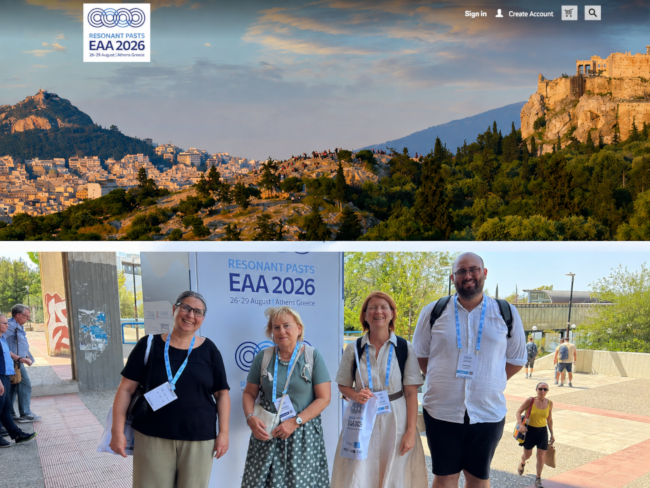
Augusztus 26. és 29. között Athén adott otthont a régészettudomány és az örökségvédelem egyik legnagyobb nemzetközi éves találkozójának. Az EAA konferenciái évről évre a világ számos országából hozzák össze a múlt kutatóit, teret adva az új eredmények bemutatásának, a módszertani újdonságok megvitatásának és új szakmai együttműködések kialakításának.
Az idei konferencia mérete önmagában is jól mutatja az EAA találkozóinak jelentőségét: a több mint 2600 résztvevő nyolc fő témához kapcsolódó, összesen 294 szekció programjából válogathatott. Összehasonlításként 2025-ben Belgrádban 276, 2024-ben Rómában pedig 363 szekció szerepelt a programban.
Intézetünk kutatói Athénban
Munkatársaink idén is számos témával kapcsolódtak be a konferencia szakmai programjába. Előadásokkal és poszterekkel mutatták be legújabb kutatási eredményeiket, emellett több szekció szervezésében is részt vállaltak. Az EAA így nemcsak az eredmények bemutatására, hanem a nemzetközi szakmai párbeszédre, új kutatási kérdések megfogalmazására és együttműködések építésére is fontos lehetőséget jelentett.
A konferencia szekcióinak és előadásainak absztraktjai az EAA konferencia honlapján érhetők el. Munkatársaink előadásait és posztereit a bejegyzés végén mutatjuk be.
Új elnökkel folytatja az EAA
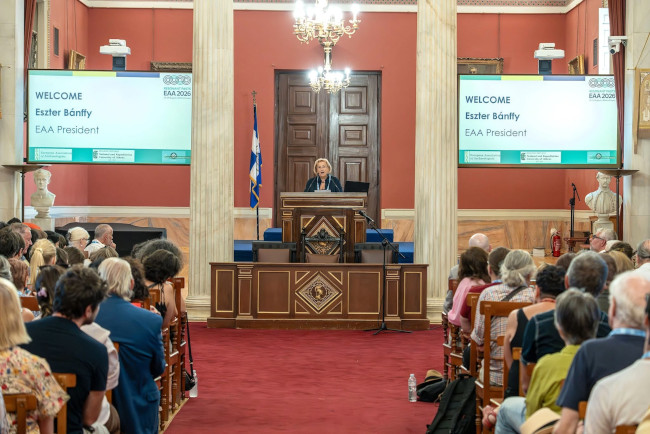
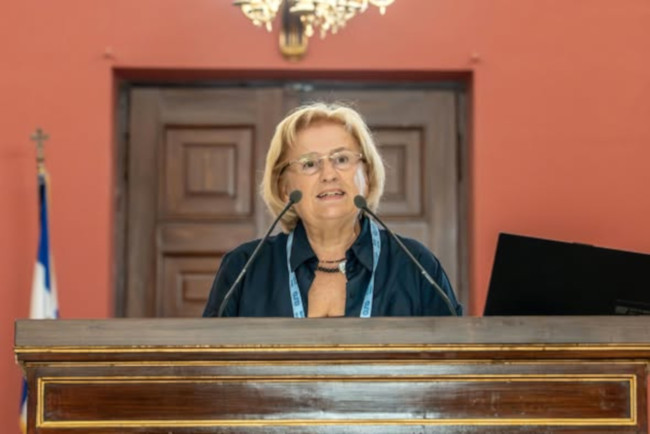
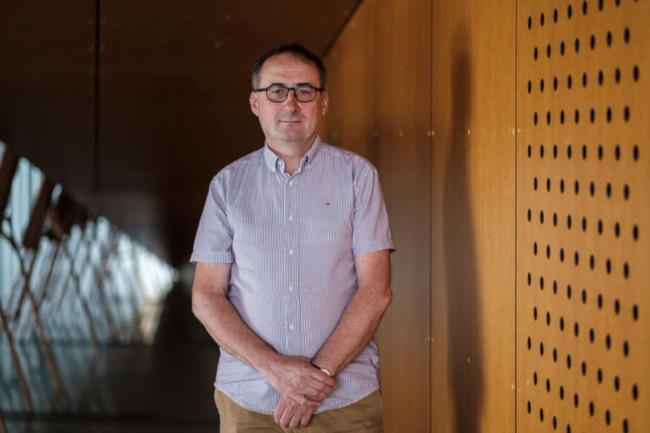
Az athéni konferencia az EAA történetében is fontos mérföldkő volt. Intézetünk tudományos tanácsadója, Bánffy Eszter elnöki ciklusának lezárultával a szervezet új elnökévé Arkadiusz Marciniak professzort, a poznańi Adam Mickiewicz University kutatóját választották.
Athén után már a következő találkozókra készül a nemzetközi régészeti közösség: 2027-ben Leiden, 2028-ban pedig Bécs ad otthont az EAA éves konferenciájának.

Munkatársaink előadásai és poszterei
1. SZEKCIÓ — LOCAL KNOWLEDGE, RESILIENCE AND ADAPTATION IN LANDSCAPES FROM ANTIQUITY TO THE RECENT PAST
Kolláth, Ágnes – Kovács, Bianka Gina – Kovács, Gyöngyi: Living through 150 years of war – Rural communities in the Hungarian border zone between the Ottoman and Habsburg Empires (poszter)
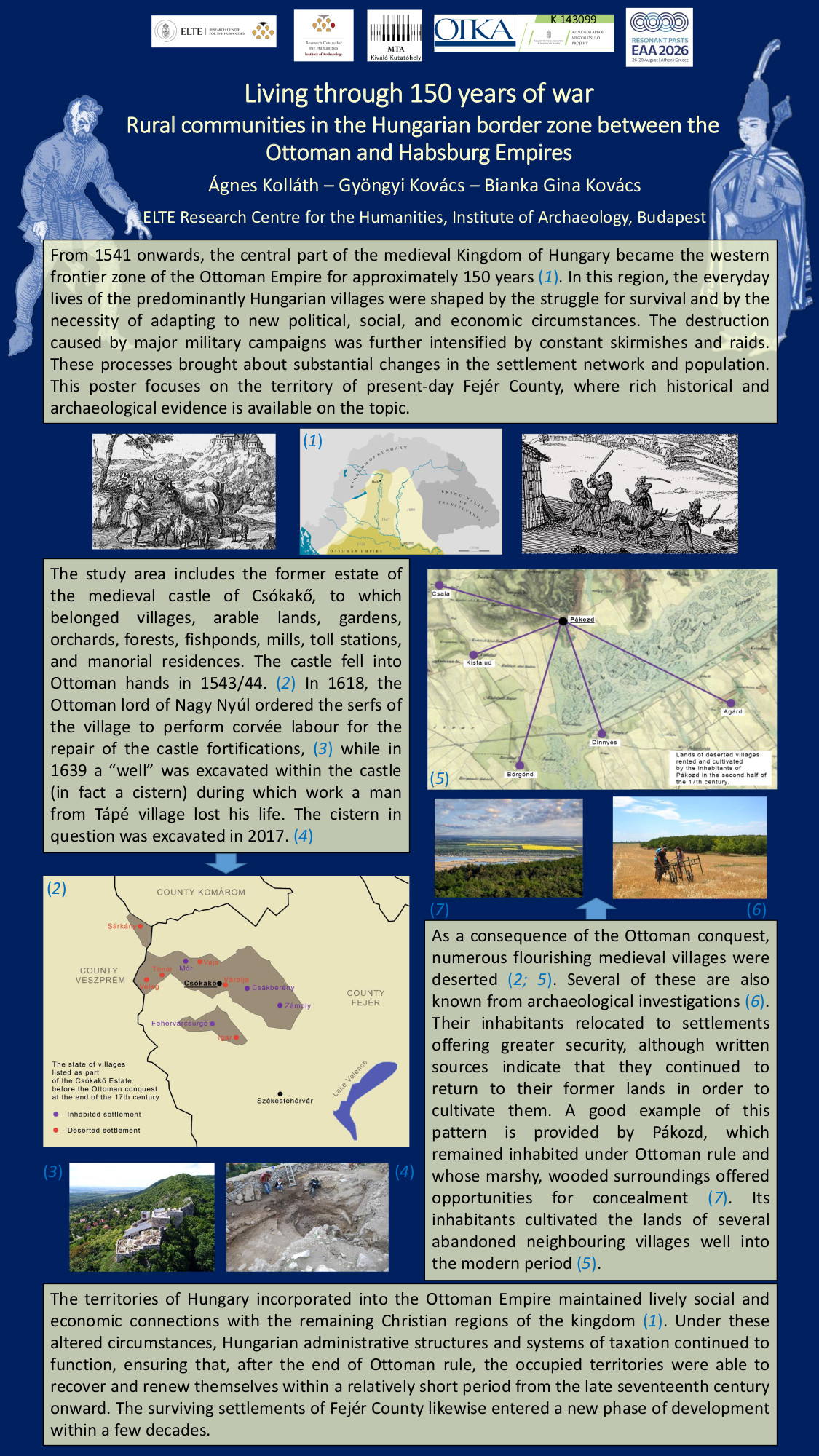
The 16th-17th centuries were a tumultuous time in Hungarian history, stuck between the two most significant powers of the era. The middle of the medieval kingdom came under Ottoman rule by the 1540’s, while the northern and western counties belonged to the Habsburgs. County Fejér, the study area of the present poster had been a flourishing centre of the country between the Danube River and Lake Balaton, then became a border zone of the two warring empires during these 150 years. The civilian population faced constant skirmishes, not to speak of the devastation brought on by large military campaigns. They also had to live under double administration and taxation, as their former Christian and new Ottoman lords could both enforce their demands in the unstable environment. These factors took great toll on the rural settlement network. Many villages have been abandoned, other places became scarcely inhabited due to population loss, while some communities managed to get through. Thanks to numerous past and ongoing projects mapping the archaeological topography, the material culture and the historical sources of the region, we have an extensive knowledge on these processes. Our examples show the most typical tendencies. Dwindling communities that merged to be able to maintain their livelihood. People that fled to more secluded villages or established temporary refuges in the wilderness during dangerous times, then moved back near the main roads. An agriculture that shifted gradually towards animal husbandry in a region with excellent arable lands, as livestock was easier to keep, hide, transport and sell than crops. In summary, extreme mobility, efficient information exchange and code switching in communication were keys to survival, and this study shows how rural communities managed or failed this near-impossible adaptation.
58. szekció — LOCALISM AND IMPERIALISM IN THE FOODWAYS OF EMPIRES
Kolláth, Ágnes – Kovács, Gyöngyi: Black soup or herbathé? Influence of the Ottoman and Habsburg Empires on Hungarian foodways in the 17th–18th centuries (előadás)
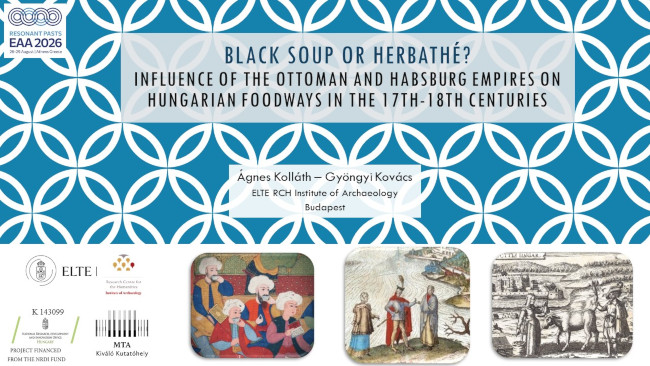
The territory of the medieval Hungarian Kingdom became a conflict zone between the mighty Ottoman and Habsburg Empires in the 16th-17th centuries, with each of them occupying a significant part of the country. The local Hungarians felt strong animosity towards both. Besides turning their homeland into a warzone for 150 years, the Ottomans were representatives of the Islam and eastern habits, while the Habsburgs tried to erase the local language and traditions, and force Roman Catholicism on the people. The customs of the Turkish and the Germans, although to a different degree, were both considered alien to many, desirable to some. They influenced every aspect of life, no matter how fiercely the inhabitants tried to maintain their own ways. These effects can be observed in the study of foodways as well. The clearest proof of cultural resistance is that Ottoman pottery types, even Chinese porcelain – then highly fashionable both in the west and the east – almost exclusively occur in archaeological sites, where the Sultan’s army had a garrison, as the difference between table manners was impassable. Meanwhile, several of the meals themselves have been incorporated in the local cuisine. At the same time, few German and Austrian recipes were popular, but their good quality ceramic wares were widely used. The influx of these objects increased exponentially after the reconquest at the end of the 17th century and new local pottery types also emerged, signalling change for example in dairy practices. Zooarchaeological evidence from features containing layers from before, during and after the Ottoman occupation also highlights the differences between consumption patterns. Comparing these data with the numerous and colourful written sources and images of the era gives us a multifaceted view on the dual imperial influence on Hungary’s early modern foodways.
127. SZEKCIÓ — 3D DOCUMENTATION TECHNIQUES IN ARCHAEOLOGY: OPPORTUNITIES AND CHALLENGES FROM PRACTICAL APPLICATIONS
Ekrik, Ákos: Building Workflows for Building Stones – 3D Documentation of Architectural Stone Carvings
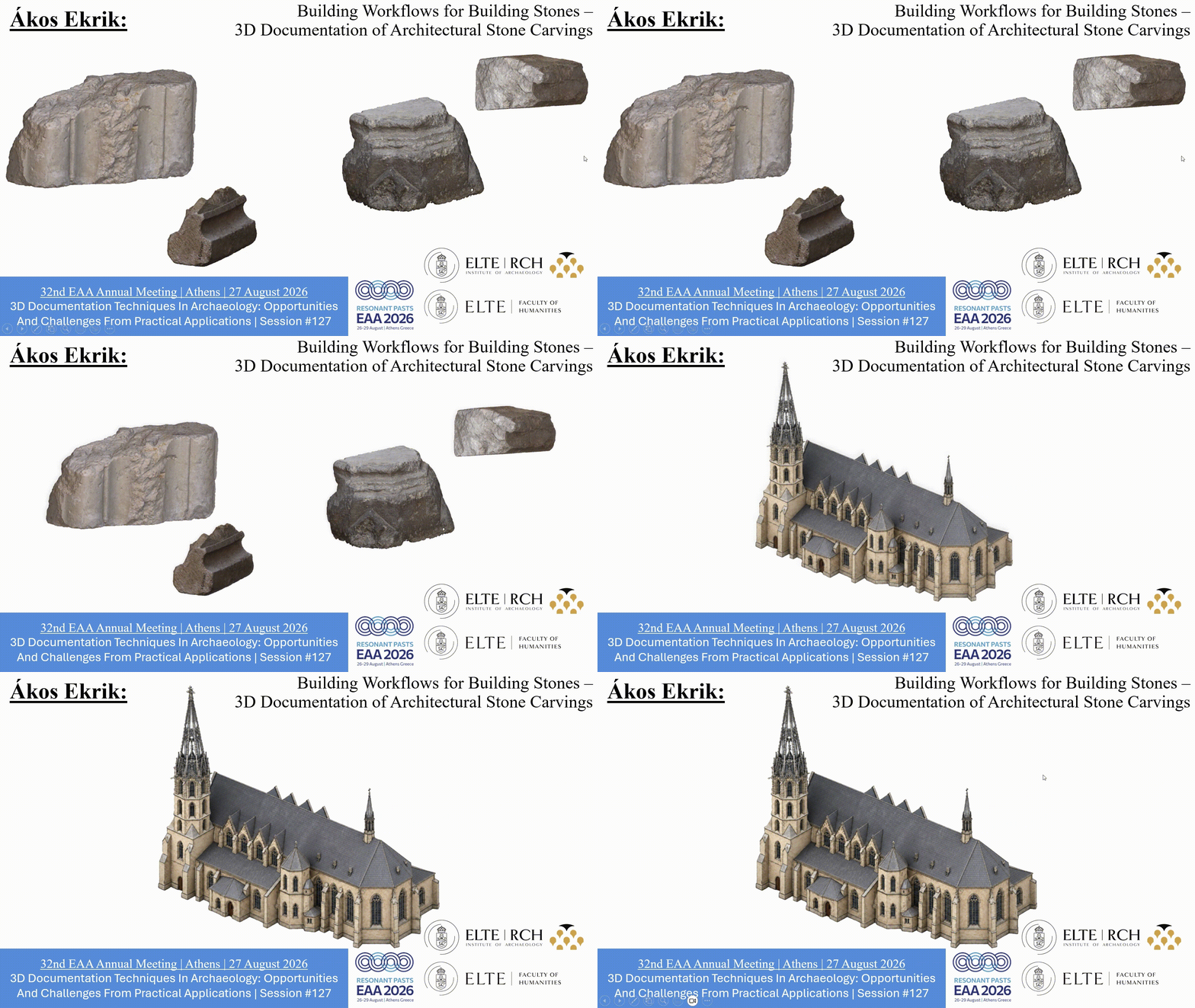
The documentation of architectural stone carvings presents recurring challenges in archaeological practice, including limited accessibility, large size, and inadequate storage conditions. This paper aims to present and compare 3D documentation workflows for architectural stone carvings based on two case studies from Hungary.
The methodological framework is primarily based on photogrammetry, which currently represents one of the most accessible and cost-effective solutions for documenting large and complex stone artifacts. The workflows developed during the author’s MA and PhD research are compared in order to highlight their practical advantages, limitations, and applicability in different research contexts.
The first case study focuses on the stone material of a demolished medieval parish church in Noszvaj, originally built in the 13th century and later modified during the Gothic period. The second case study examines the architectural stone carvings of the Inner City Parish Church in Pest, a monument with a complex building history spanning from the medieval period to the early modern era.
Beyond documentation, the paper outlines further possibilities for data processing and analysis, including profile extraction and surface analysis. The standardized 3D datasets also provide a foundation for future database development and AI-assisted analytical systems.
146. SZEKCIÓ — RESILIENCE, ADAPTATION, AND TRANSFORMATION: TRAJECTORIES OF CHANGE IN PAST AND PRESENT HUMAN SOCIETIES
Peter Tóth – Johana Malíšková – Sébastien Manem – Veronika Brychová – Miriam Nývltová Fišáková – Zdeněk Tvrdý – Pavlína Ingrová – Zuzana Porubčanová – Peter Milo – Rastislav Hreha – Dalia Pokutta – Eszter Bánffy: Integrating stable isotopes, lipid residues, and pottery chaîne opératoire: Late Neolithic lifeways and resilience at Čičarovce, Slovakia (5000-4500 cal BC)
During the construction of a gas pipeline at Čičarovce, Slovakia, in 1976, excavations revealed 12 Late Neolithic graves (5000-4500 cal BC), including a central burial interpreted as a shaman’s grave with four consecutive burials, surrounded by five pits. While previous publications have focused on typological-chronological analysis of pottery, this study uses an integrated bioarchaeological approach to reconstruct the subsistence strategies and social organization of this community. This research addresses three central questions: (1) What was the paleoenvironmental context of the settlement? (2) How do human dietary isotopes correlate with faunal evidence and lipid residues in pottery? (3) What do pottery production techniques and dietary patterns reveal about social differentiation within the community? Human and faunal skeletal remains from museum collections underwent zooarchaeological and anthropological analysis, as well as stable isotope (δ13C, δ15N) analysis, and 14C dating to reconstruct diet and chronology. Ceramics were analyzed by lipid extraction using GC-FID, GC-MS and GC-C-IRMS to identify absorbed organic residues and determine the function of the vessels. Analysis of ceramics using the chaîne opératoire method examines the complete production sequence and identifies technical choices that reflect learned traditions and social transmission. This integrated analytical approach aims to deepen our understanding of the social structure, resilience and adaptation of Late Neolithic communities in the Upper Tisza region. This research is supported by the RES-HUM project (Ready for the Future: Understanding the Long-Term Resilience of Human Culture; CZ.02.01.01/00/22_008/0004593).
F. Romhányi Beatrix: Mapping Resilience: Parish Networks, Land Use, and Settlement Patterns in Late Medieval Hungary (előadás)
This paper explores late medieval land use and settlement patterns in the Kingdom of Hungary through large-scale spatial analysis of ecclesiastical and fiscal data. The study draws on the RD1500 database, which currently integrates nearly 15,000 settlements and over 5,000 Catholic parishes for c. 1500, complemented by c. 4,400 parishes recorded in the papal tithe register of 1332–1337 and related documents. Rather than treating ecclesiastical institutions as objects of inquiry, parish networks are used here as spatial proxies for settlement density, infrastructural reach, demographic change, and modes of subsistence.
By combining distance-based modelling of parochial catchments with fiscal evidence for cereal production, the paper reconstructs the interaction between arable farming and pastoral land use across different ecological zones. The results reveal pronounced regional contrasts between areas of dense, cereal-oriented settlement and regions characterised by extensive pastoralism, seasonal mobility, and sparse institutional coverage. In marginal and mountainous areas, large distances from parish centres correlate with Orthodox chapels and monasteries, or with the absence of stable ecclesiastical infrastructure, pointing to adaptive land-use strategies rather than institutional deficiency. Comparison of the two time slices also reveals significant shifts in spatial patterns, allowing for the identification of both climatic and human-driven factors behind these changes.
The Hungarian case highlights resilience as a product of land-use diversity and flexible settlement organisation, demonstrating how mixed agro-pastoral economies sustained long-term continuity under varying environmental and social constraints. Methodologically, the paper illustrates the potential of high-resolution, relational datasets for tracing adaptive socio-ecological trajectories in medieval Europe.
207. SZEKCIÓ — RECONSTRUCTING PREHISTORIC LIFEWAYS: MULTIDISCIPLINARY APPROACHES TO STUDYING MOBILITY, SUBSISTENCE, POPULATION STRUCTURE, AND SETTLEMENT PATTERNS
Anja Furtwängler – Anett Gémes – Klára P. Fischl – Kristóf Fülöp – János Dani – Edit Mester – István Major – Alissa Mittnik – Tamás Hajdu – Johannes Krause et al.: Ancient DNA and New Radiocarbon Dates Reframe Multiple Burials at Bronze Age Tiszafüred–Majoroshalom (előadás)
Tiszafüred–Majoroshalom I-II. (eastern Hungary) is a well-known Bronze Age cemetery excavated between 1961–1975 near to the Tiszafüred-Ásotthalom tell settlement. The cemetery (with 1,006 graves, in use until around 1300 BC) captures change across the Otomani–Füzesabony and Tumulus horizons (Hungarian Middle–Late Bronze Age transition around 1500/1450 BC). At site Tiszafüred–Majoroshalom III, between the cemetery and the tell, two settlement pits were excavated in 2020, uncovering the remains of 44 individuals. We combined this archaeological framework with genome-wide ancient DNA. Screening 81 human samples for DNA preservation we generated genome data passing quality thresholds for 37 individuals (26 males, 11 females). Forty-four normative graves were directly radiocarbon dated, and further thirteen 14C dates were measured from the settlement pits. Kinship analysis identifies no first- or second-degree relatives, supporting a burial community based on specific selection criteria other than biological kinship. Population structure shows one dominant genetic cluster in every phase, with mass-grave and regular-grave individuals present in all clusters. Outlier frequencies suggest episodic mobility and admixture tests indicate overall continuity without population replacement while permitting additional ancestry streams. An identity-by-descent (IBD) network links seven males via very distant biological ties (>6th degree) that span the mass grave (Feature 4) and normative graves, which is consistent with a shared community background concept rather than family-group deposition practice. Together, these data refine mobility models and place the phenomenon of the mass grave in context.
239. SZEKCIÓ — DEPOSITION ON BRONZE AGE AND IRON AGE SETTLEMENTS
András Gömöri – Vajk Szeverényi – Klára P. Fischl – Alexandra Gavan – Tobias L. Kienlin: A Middle Bronze Age bronze hoard from the settlement of Szakáld–Testhalom (előadás)
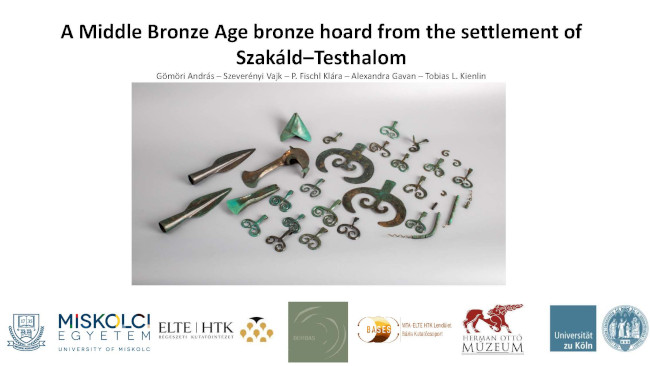
Within the framework of BORBAS (Borsod Region Bronze Age Settlement) international project investigating the Middle Bronze Age settlement network of the Southern Borsod Plain, research has revealed a dense network of settlements characterised by a complex internal structure. The central parts of these sites consist of multi-layered tells or tell-like mounds, surrounded by horizontally organised settlement zones separated by ditches. Systematic metal-detecting surveys have been conducted at all elements of this settlement network in order to determine the precise locations of metal finds and material remains associated with metal production. During these investigations, the bronze hoard presented here was discovered on the outer periphery of the horizontal settlement part at Szakáld–Testhalom. The assemblage contains elements of female attire as well as prestige weapons. In addition to a brief comparative analysis of similarly composed deposits from Middle Bronze Age tell and fortified settlements, the presentation focuses on the methodology of metal-detecting surveys at OFCC sites and presents the results of scientific analyses of the Szakáld hoard, including GC–MS analysis and the examination of textile remains.
245. SZEKCIÓ — PRODUCTION AND TRADE IN THE EASTERN MEDITERRANEAN FROM THE HELLENISTIC TO THE ROMAN PERIOD: FROM TECHNICAL KNOWLEDGE TO COMMERCIAL NETWORKS
Zsófia Masek – Anna Zsófia Biller – Lóránt Vass – András Zoltán Gulyás: A Roman Ivory Scabbard Chape from a Sarmatian Grave: Research Perspectives on Ivory Sword Fittings in the Pannonian Region
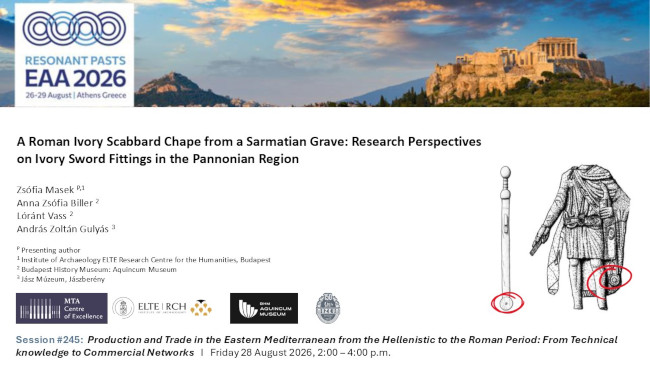
A recent rescue excavation conducted in the Sarmatian Barbaricum of the Carpathian Basin—located approximately 65 km east of Aquincum, Pannonia—revealed a heavily disturbed Roman-period Sarmatian grave. It included an ivory scabbard chape, which likely reached the site as part of a provincial Roman spatha and its associated fittings.
We present the results of the zooarchaeological analysis, which has identified the material as elephant ivory, excluding alternatives like narwhal or walrus tusks, whalebone, red deer antler, or hippopotamus ivory. This study examines the distribution, social implications, and interaction networks of ivory scabbard components within the Roman Empire and beyond its frontiers.
Box-shaped chapes (Dosenortbänder) were primarily in use along the Rhenish limes (second quarter of the 3rd century AD until the end of the century, C1b–C2 periods). While representative specimens are typically associated with high-ranking military officials, a surprisingly high number of "barbarian" imitations have been identified in northern Europe, linked to elite warrior groups. Box-shaped chapes crafted from ivory are exceptionally rare; only about ten examples are known. The sole known site in the Barbaricum was the Vimose bog deposit in Denmark.
Ivory carvers (eborarii) operated trans-provincial trade networks to procure raw materials and distribute manufactured products. Ivory objects arrived in Pannonia as finished goods. Only 1% of the processed bone artifacts from Aquincum are ivory, evidencing long-distance trade in urban centers. Within this small percentage, military equipment is even scarcer.
This study explores whether the object’s presence is linked to specific military trade networks and dispersal patterns or to the long-distance commercial distribution in Pannonia. While Roman weapons often crossed borders through trade, diplomatic gifting, or loot, the rarity of this military prestige item suggests a connection to individual mobility or elite interaction networks, serving as a significant source of personal prestige within Sarmatian society.
246. SZEKCIÓ — THE MEANING AND PRACTICE OF BRONZE METALLURGY IN PREHISTORY — DEDICATED TO HEPHAESTUS, THE DIVINE SMITH
Klára P. Fischl: The symbolism of bronze objects and their relationship to other spheres of the material world (előadás)
In the Middle Bronze Age and Koszider-period (RBA-BB1) metalworking of the Carpathian Basin, decorative motifs appear primarily on bronze and gold prestige objects whose interpretation cannot be undertaken in isolation. These ornaments (spirals, waves, concentric circles) form part of a symbolic system that extends into other spheres of everyday life. Their understanding therefore requires consideration not only of ceramic and bone craftsmanship, but also of the internal spatial organisation of settlements. According to the observable repetitive elements and regularities, the recurring additional design elements must have possessed a certain mnemonic function, through which they were connected to an underlying concept or set of concepts. Although this symbolic system extends across broader spatial and chronological frameworks, the paper examines the identity-signalling role of motifs appearing on metal artefacts through connection with other phenomenon within the Otomani–Füzesabony cultural complex. The aim of the presentation is not to match symbols with modern concepts, but to place the symbol system in context
Viktória Kiss – Viktória Kisjuhász – Orsolya Mateovics-László – Boglárka Maróti – Nóra Szabó – Gábor Szilas – Szabolcs Czifra – Gabriella Kulcsár: Krummesser – from stone to metal or vice versa? (poszter)
At Budapest-Óbuda, Északi Városkapu site numerous small jugs and a unique metal knife were found in a scattered cremation burial of the Nagyrév culture. Based on non-destructive pXRF and prompt-gamma activation analysis the knife was made of copper. The shape of the copper object is similar to stone Krummesser (German: curved knife). Classic stone curved knives appeared at the Early Bronze Age in Romania, in assemblages of the Glina III–Schneckenberg complex and in the later, Epi-Schneckenberg period, as well as in the Otomani, and Wietenberg culture during the Middle Bronze Age. In Poland, similar stone knives are associated with the Trzciniec culture or with the Otomani–Füzesabony culture. In Hungary the most characteristic stone Krummesser was discovered from an urn burial. This grave was identified as an unusual burial of the Füzesabony culture, since the deceased of this culture were usually buried with skeletal ritual. Several less characteristic stone pieces were found in other contemporaneous settlements of the Vatya and the Hatvan culture, and in the Copper Age Baden culture. Some researchers believe that the stone curved knives may have been influenced by early metal pieces. Based on the copper knife dating to the period of the Early Bronze Age Nagyrév culture, our presentation raises the possibility that the mentioned Early and Middle Bronze Age curved stone and metal knives were actually used contemporaneously with similar functions.
281. SZEKCIÓ — NETWORKS OF PRESTIGE? ELITE IDENTITIES IN MIRROR OF HIGH VALUE OBJECTS FROM AN ARCHAEOLOGICAL PERSPECTIVE
Dániel Giedl – Péter Langó: Reflections of Wealth and Culture: Byzantine and Moravian jewellery in a 10th-century burial site in the Carpathian Basin (előadás)
A richly adorned female burial dating to the 10th century was unearthed during an excavation near Csévharaszt, Hungary, in autumn 2024. The grave contained the remains of a woman with an estimated age-at-death between 30 and 40 years. In addition to a variety of dress accessories, a range of jewellery items were uncovered in the grave, whose technological and typological characteristics suggest connections to both Byzantine and Moravian craftsmanship. A broader examination of these artefacts offers indirect insight into the diverse cultural connections of the former community. A particularly noteworthy discovery was a head ring of a rare type, composed of gilded silver plates. The distinctive technical features of the ring suggest that its design can be associated with Byzantine jewellery craftsmanship. However, only a few comparable examples, discussed in this study, are known from 9–11th-century East-Central European jewellery, reflecting the wearer’s high social elite status. A gilded ornamental button, decorated with a floral pattern, was also found in the grave. The design of the ornamental button is indicative of the group of decorative buttons generally referred to as Great Moravian ’gombíky’. The Moravian decorative button discovered in the grave offers an opportunity to re-evaluate the potential nature of the relationship between the former Moravia and the Hungarians in the 10th century. In the presentation, an overview is provided of the distribution and chronology of Moravian decorative buttons discovered in the 9th–10th-century Hungarian environment. The valuable jewellery and clothing accessories found in the grave in Csévharaszt, which indicate the high social prestige of the wearer, provide an opportunity to understand the social network of the elite living in the region during that period.
294. SZEKCIÓ — BRIDGING HERITAGE AND HOPE – WORK IN CONFLICT ZONES THROUGH THE EARLY CAREER ARCHAEOLOGIST’S LENS — kerekasztal bezsélgetés
Szervezők: Isber Sabrine (Milá and Fontanals Institute for Humanities Research, Spanish National Research) – Eszter Bánffy (ELTE Research Centre for the Humanities) – Elin Dalen (Independent Heritage Manager) – Carsten Paludan-Müller (Cambridge Heritage Research Centre) – Hamoudi Khalaily (Israel Antiquities Authority)